LINK: hospital of emotions: fourth floor – compassion department
Preface: hospital of emotions: fourth and third floor – anger department
As an empath, I feel like I have a lot of compassion but TBH, it can be exhausting as well.
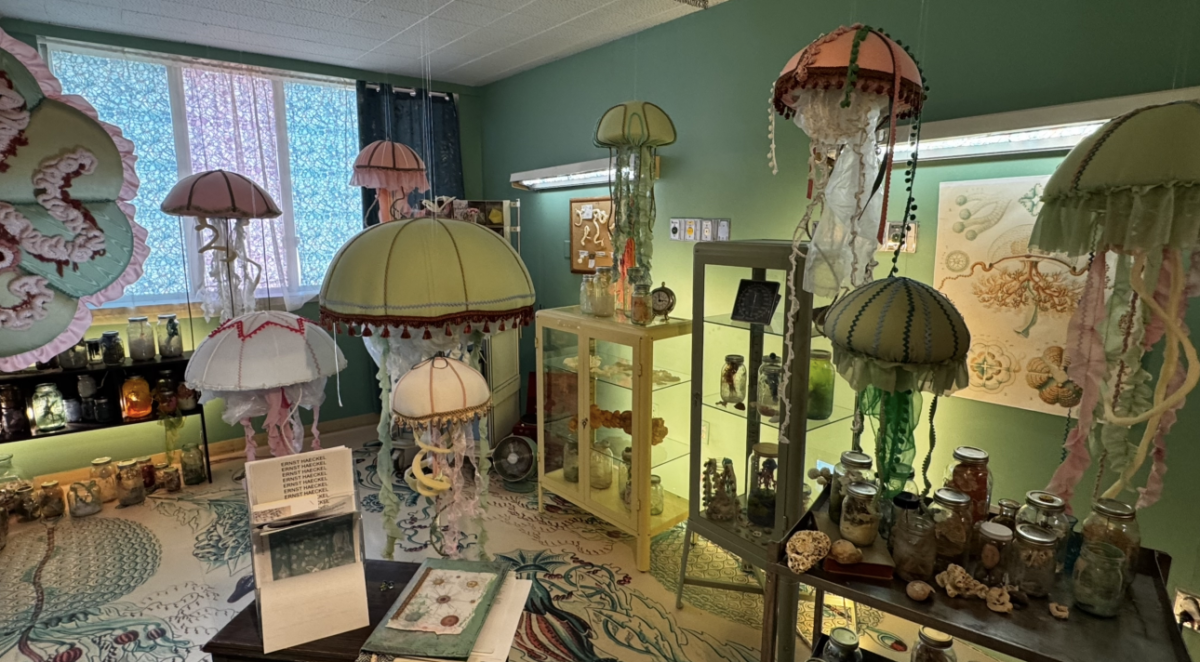
Room 62: Jellyfish arrive to greet us at the hospital with their ethereal softness and remarkable ability to endure. One species in particular, the Siphonophorae, beckons. Although a siphonophore appears to be a single organism, it is in fact a collective of tiny, interdependent units called zooids, each with a specialized role: movement, nourishment, or reproduction.
As their tentacles expand, we may begin to draw parallels to compassion and collaboration. In releasing this thought, the siphonophore colony becomes a mirror for our own aspirations as an artistic community: that by supporting one another, our collective survival becomes richer and more meaningful.
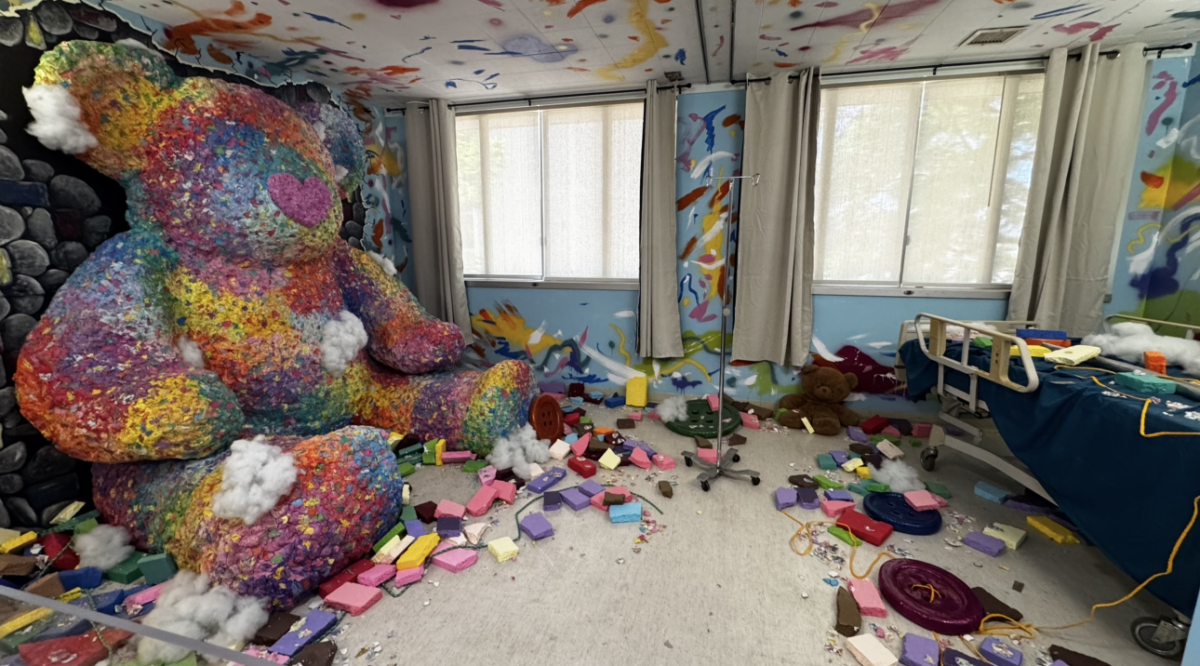
Room 46: Compassion listens carefully.
They don’t interrupt or judge.
They sit with discomfort.
They try to understand.
They respond gently.
They make space for others.
And meet you where you are.
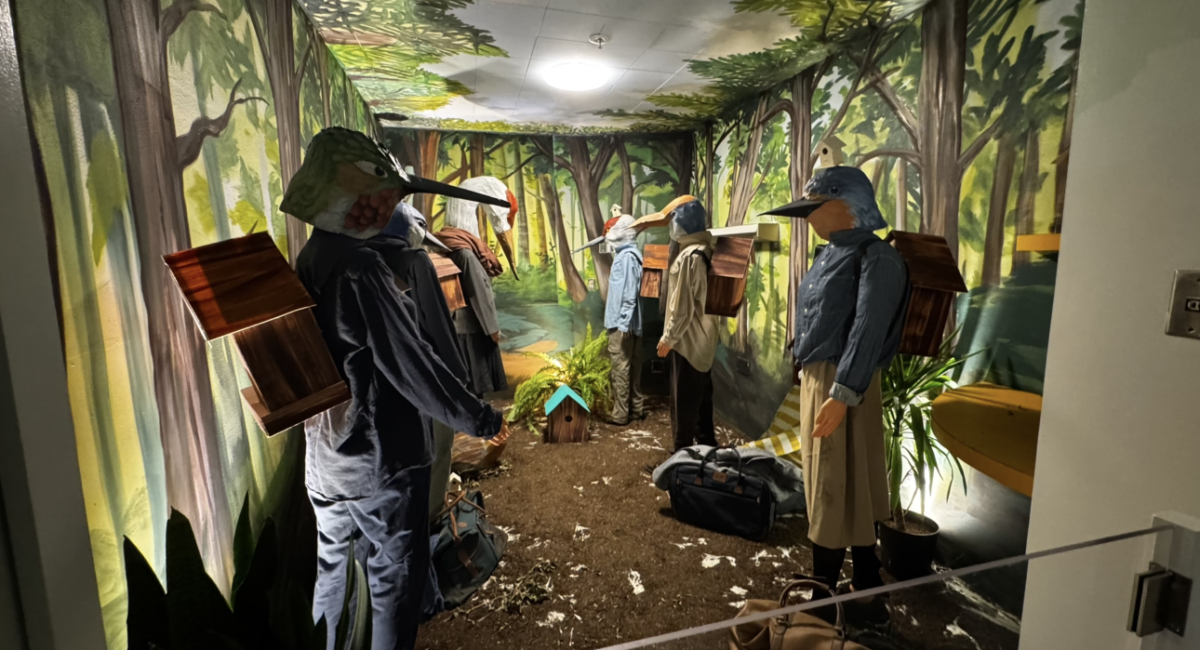
Room 51: In a great city like Los Angeles you have a rich diversity of cultures, a beautiful vibrant mix of ethnicities and nationalities.
What we seem to forget sometimes is the struggle and sacrifice that our ancestors made to get here.
This installation is about migration, but not your familiar view on migration.
This migration shows birds in migration.
The installation presents birds in migration – hummingbirds, Robins, Swallows, Cranes Birds with human bodies. The idea is to strip the human ethnicity of the migrant and replace the human head with a bird head, an allegory similar to George Orwell’s Animal farm, inspiring empathy and compassion.
Birds migrate for different reasons and so do humans. Some of the birds have a birdhouse on their head as a symbol that the only thing that occupies their mental state is their home. The one they left behind and the one they hope to arrive at the end of the migrant journey. The birds carry bags and luggages and backpacks shaped like birdhouses to symbolize their entire home on their backs, dressed in clothes weathered by the journey. Some with faces of fear, hope and or resilience.
My name is Napo. I was born in Los Angeles, first-generation to a mother from Mexico and a father from El Salvador. For the past eight years, I have lived outside the United States – first in Europe and the UK, then in Buenos Aires, Argentina, and now traveling through Brazil.
Through my work, I explore what it means to move between cultures-to belong, and not belong. I am now married to a Brazilian, and sometimes / wonder where our children will be born, and whether they, too, will choose to migrate.
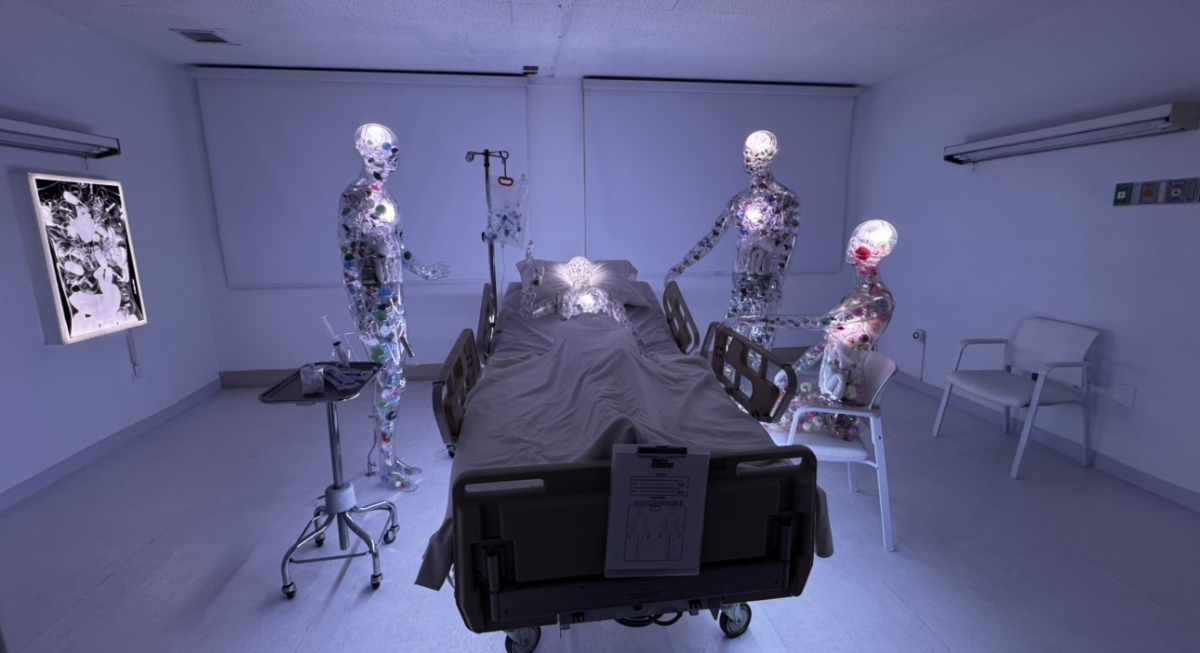
Room 60: In this room, everyone appears transparent.
In hospitals, we often see roles such as patient, caregiver, and visitor, but rarely the full person within them. This installation invites us to imagine the inner worlds carried inside each figure, and reminds us that we all have, or will, move through these roles.
Inside each body exists two worlds, the visible and the invisible. While our organs are shared and familiar, the inner worlds they hold are deeply personal. In medicine, light reveals the physical. Here, light and language reveal thoughts, memories, and feelings.
Compassion begins when we recognize that everyone is carrying something. Your pain and joy are not separate from mine.
Connection matters. Presence matters. What might change if we could truly see what each person holds inside?


Leave a Reply