LINK: hospital of emotions: fifth floor – sadness department
Preface: hospital of emotions: sixth floor and fifth floor – joy department
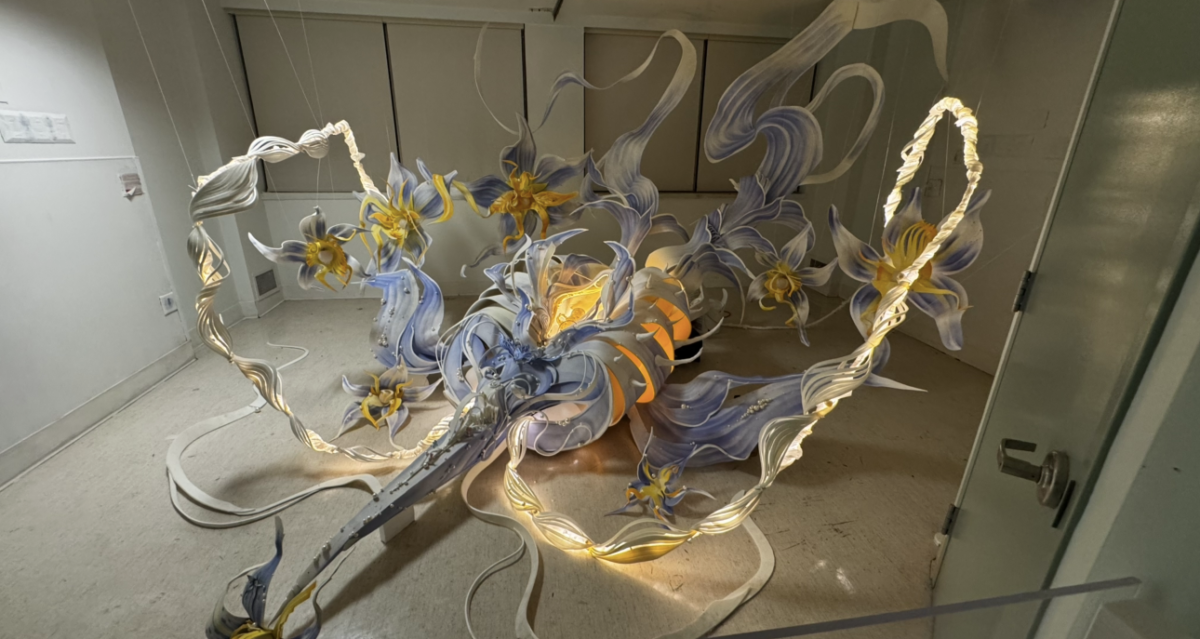
Room 25: There is a kind of knowing that only grief can teach, depth that joy, in its brightness, cannot reach. This work does not ask you to heal. It asks you to stay, to let sorrow be what it has always been: not an ending, but a slow and necessary opening.
At its center, a great fish waits, soft, luminous, holding the body the way water holds: completely, without asking why. From its eye, a tail of teardrops falls until it finds the flower that could only blood because something, somewhere, wept.
Sadness is personal. But never unique.
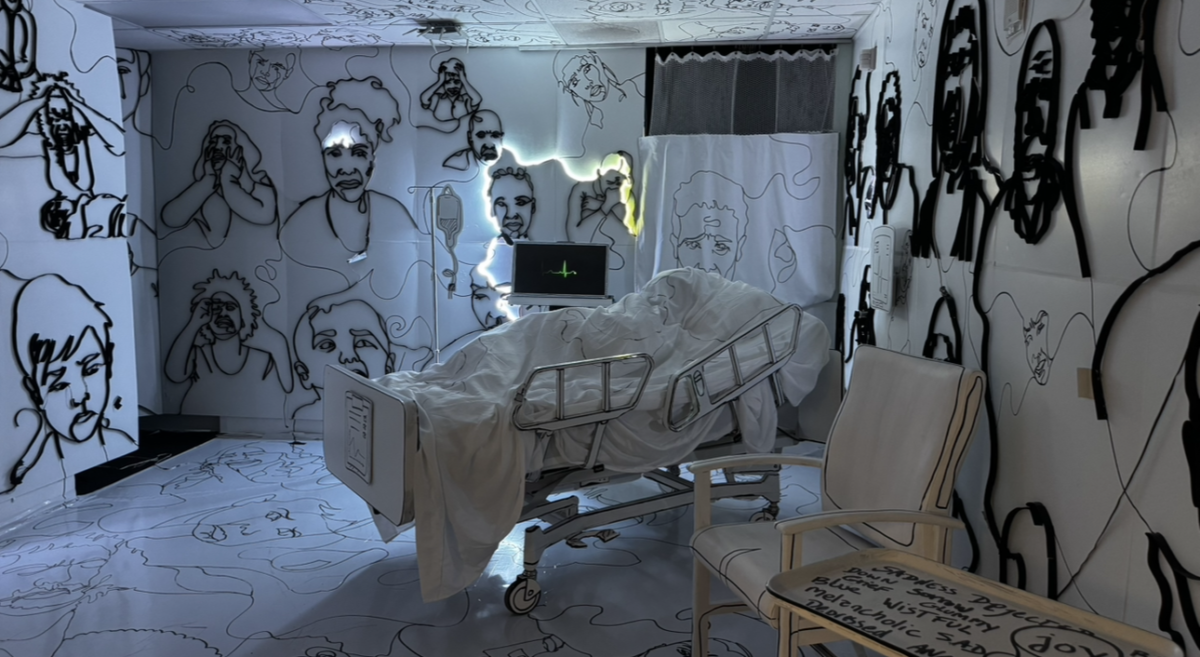
Room 26: Through continuous line work drawn across the walls, ceiling, and floor, human figures of all identities emerge-stripped from their raw emotional essence, reminding us that sadness belongs to no single body or story.
Raised, tactile lines form lifelines that carry a programmed pulse of light and sound, echoing a heart monitor-slow, deliberate, like breath, like waiting.
The room exists first in darkness, where the work reveals itself only as the light travels line by line, inviting view into an intimate encounter with emotion. Then comes the fracture-the pulse breaks, the sound expands, and the room floods with light, exposing every figure at once in a moment not a release, but of recognition.
This space is not about treatment, but truth: a place where emotion is held, witnessed, and made visible.
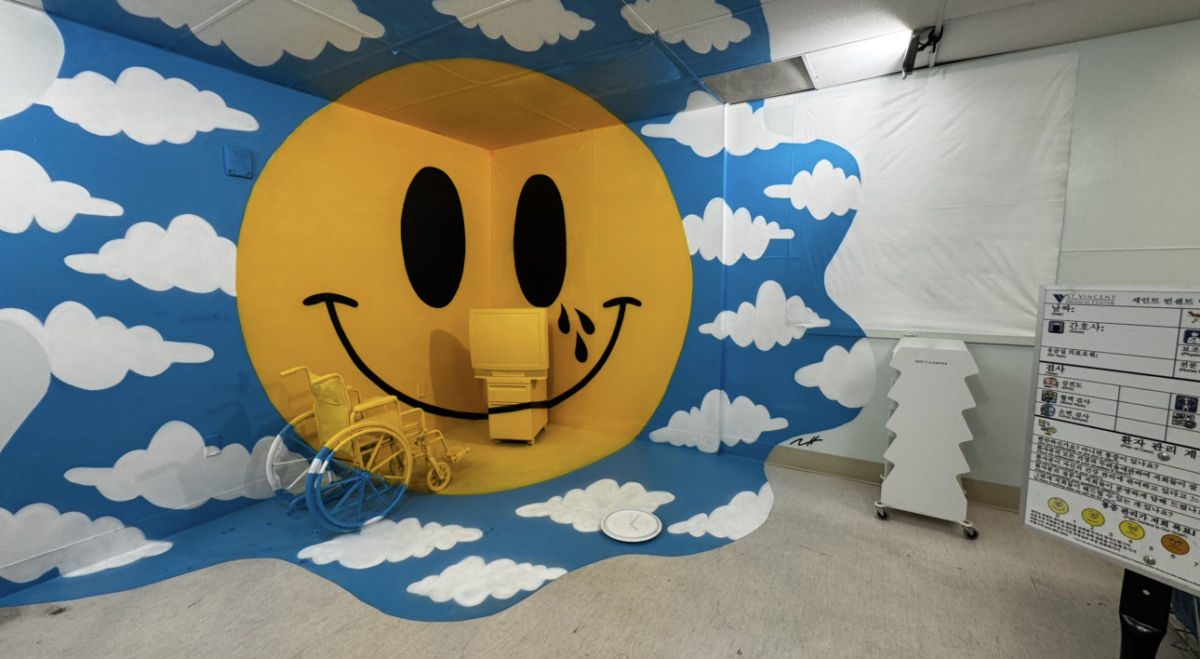
Room 30: “Happy Tears” presents sadness not as darkness, but as something quietly human, soft, concealed, and unresolved.
The installation transforms an abandoned hospital room into an immersive anamorphic mural where a classic yellow smiley face floats in the sky, appearing perfectly flat and centered only from the viewing point. When viewed from any angle outside of that point, the illusion fractures: the smile stretches, the illusion of happiness deforms.
Behind the smiley face, a blue sky with drifting white clouds fills the space, evoking calm, innocence, and performative positivity. From the smiley’s eyes, a subtle tear-drop tattoo emerges, quiet symbols of sadness and death that leak through the surface of forced happiness.
These tears are not dramatic; they are restrained, decorative, and almost beautiful, reflecting how sadness is often masked, stylized, or hidden behind socially acceptable expressions of joy.
The hospital setting amplifies the metaphor. A place associated with care and vulnerability becomes a stage for emotional concealment. The smile painted over a room meant to heal, suggests the pressure to appear “okay” even in moments of pain.
This room belongs in the Sadness Department as a gentle, reflective space, quiet rather than heavy. It invites visitors to slow down, find the correct perspective, and recognize how easily sadness can hide in plain sight and how precious happiness can be, easily broken at a moment’s notice.
“Happy Tears” offers no resolution, only recognition: that often, behind many smiles, something unspoken remains, patiently waiting to be seen.
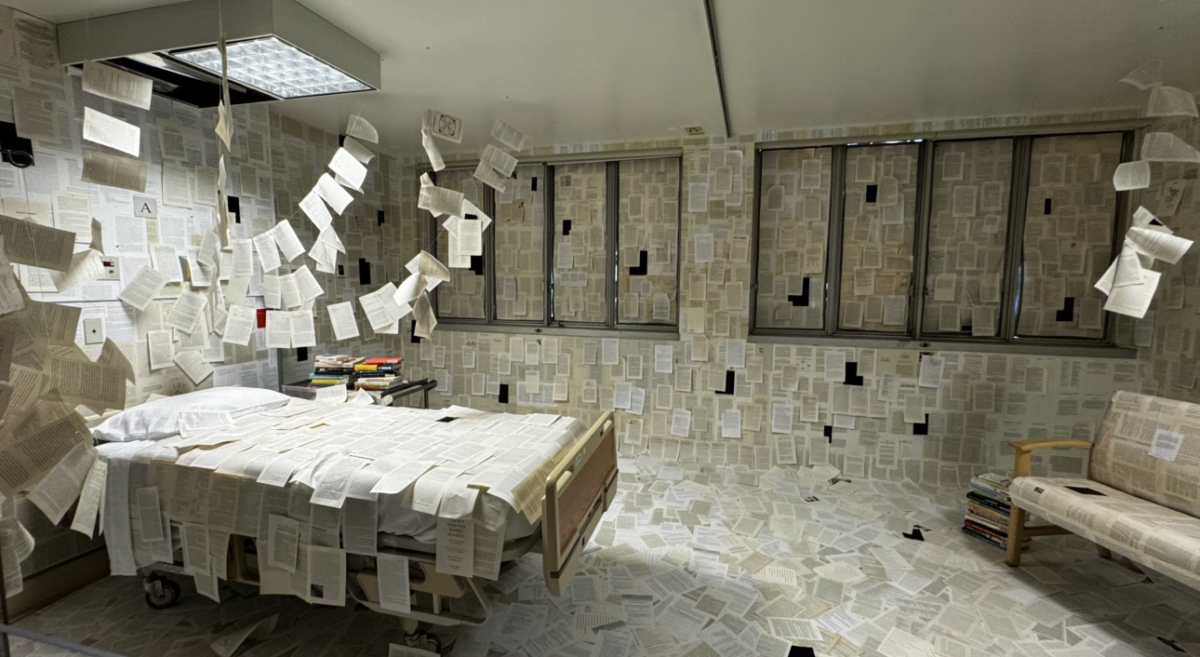
Room 33: Despite broadening awareness of mental health and the impact neurodivergence has on our society, we still don’t know much about the brain.
When something goes wrong among its one hundred trillion synapses, we expect the patient to diagnose, navigate, and execute their own treatment. Unlike other ailment or injury, when it comes to the brain, the patient is the healer.


Leave a Reply